
Introduction
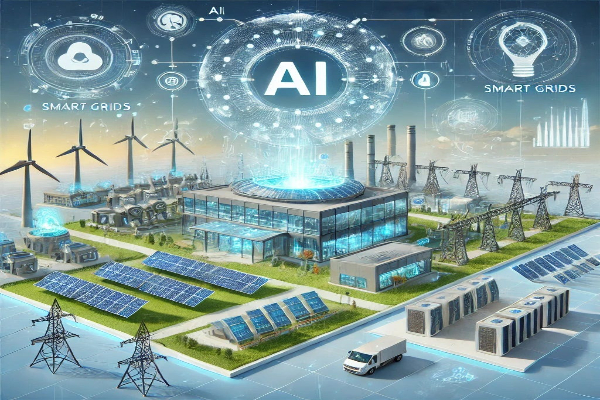
Power grids are becoming more complex as electricity demand continues to grow and renewable energy sources become a larger part of the energy mix. Traditional grid management systems often struggle to balance fluctuating demand, integrate distributed energy resources, and respond to unexpected equipment failures. As utilities modernize their infrastructure, artificial intelligence (AI) has emerged as a valuable technology for improving grid reliability, operational efficiency, and decision-making.
By combining advanced analytics, real-time monitoring, and intelligent automation, AI enables power companies to predict equipment failures, optimize electricity distribution, and enhance grid resilience. The transition toward smart grids, coupled with the growing adoption of electric vehicles, distributed generation, and battery energy storage systems, is accelerating the demand for AI-powered grid management solutions.
What is AI in Power Grid Management?
AI in power grid management refers to the use of machine learning, deep learning, computer vision, and advanced data analytics to monitor, control, and optimize electricity generation, transmission, and distribution.
Unlike conventional systems that rely on predefined rules, AI continuously analyzes operational data collected from sensors, smart meters, substations, weather stations, and transmission assets. It identifies patterns, predicts future events, and recommends operational actions that improve efficiency and reduce operational risks.
These capabilities enable utilities to make faster, data-driven decisions while maintaining a stable and reliable electricity supply.
Key Technologies Driving Intelligent Grid Operations
Modern power grids rely on multiple digital technologies working together to improve operational performance.
- Machine Learning: Machine learning models analyze historical and real-time operational data to forecast electricity demand, detect abnormal equipment behavior, and optimize power flow across transmission networks.
- Internet of Things (IoT): IoT sensors continuously collect information from transformers, substations, circuit breakers, transmission lines, and smart meters. This data provides complete visibility into grid performance and asset health.
- Digital Twins: Digital twin technology creates virtual replicas of power system assets, enabling utilities to simulate different operating conditions, evaluate maintenance strategies, and improve infrastructure planning before implementing physical changes.
- Edge Computing: Processing operational data closer to substations and field devices minimizes latency, enabling faster fault detection and quicker operational responses.
- Cloud Computing: Cloud platforms support large-scale data storage, predictive analytics, and collaboration between utilities operating across multiple regions.
Digital Twin Technology in Grid Management
Digital twin technology is transforming how utilities design, operate, and maintain power infrastructure. A digital twin is a virtual representation of physical assets such as substations, transformers, transmission lines, or even an entire power network. These digital models continuously receive real-time operational data, allowing engineers to simulate various operating conditions without affecting the actual grid.
One of the biggest advantages of digital twins is virtual simulation. Utilities can evaluate different operating scenarios, renewable energy integration strategies, and emergency response plans before implementing changes in the field. This reduces operational risks while improving decision-making.
Digital twins also support infrastructure planning by helping engineers assess future electricity demand, identify network bottlenecks, and determine where capacity upgrades will deliver the greatest value. This data-driven planning improves investment decisions and accelerates grid modernization.
Major Applications Across the Power Grid
- Load Forecasting: Accurate demand forecasting helps utilities maintain the balance between electricity generation and consumption. Advanced forecasting models incorporate weather conditions, seasonal demand patterns, industrial activity, and historical consumption data to improve prediction accuracy.
- Predictive Maintenance: Instead of following fixed maintenance schedules, utilities can continuously monitor equipment conditions and identify early signs of degradation. This approach minimizes unexpected failures, reduces maintenance costs, and extends asset lifespan.
- Fault Detection and Grid Restoration: Real-time monitoring enables utilities to identify faults immediately after they occur. Intelligent systems assist operators in locating the affected equipment, isolating damaged sections, and restoring power more efficiently.
- Renewable Energy Integration: The increasing share of solar and wind power introduces variability into electricity generation. AI helps forecast renewable energy output and optimizes dispatch strategies to maintain grid stability despite changing weather conditions.
- Energy Demand Response: Utilities can better manage peak electricity demand by analyzing consumption behavior and encouraging customers to shift energy usage during high-demand periods, reducing stress on the grid.
Role of Edge Computing in Modern Power Grids
The rapid growth of smart grid infrastructure has significantly increased the volume of operational data generated across power networks. Sending all this information to centralized cloud platforms for processing can introduce communication delays, especially during critical events. Edge computing addresses this challenge by processing data closer to substations, transformers, and field devices.
By analyzing information locally, edge computing enables utilities to make operational decisions within milliseconds. This capability is particularly important for maintaining grid stability, where immediate responses are required to balance electricity supply and demand or isolate disturbances before they spread across the network.
Benefits for Utility Companies
Power utilities are increasingly investing in intelligent grid management because of its measurable operational advantages.
Key benefits include:
- Improved grid reliability
- Faster outage detection
- Reduced maintenance expenses
- Better renewable energy integration
- Increased operational efficiency
- Lower transmission losses
- Enhanced asset utilization
- Improved customer service
- Better energy forecasting
- Stronger cybersecurity monitoring
These improvements contribute to lower operating costs while supporting long-term sustainability goals.
Challenges Limiting Adoption
Despite significant progress, several challenges remain.
Large utilities often operate aging infrastructure that requires substantial modernization before advanced digital technologies can be fully implemented. Integrating data from multiple legacy systems is another complex task. Cybersecurity concerns, workforce training requirements, regulatory compliance, and the high initial investment also influence adoption decisions.
Successfully addressing these challenges requires careful planning, robust cybersecurity frameworks, and continuous workforce development.
Industry Trends
Several emerging trends are shaping the future of power grid management.
- Expansion of smart grid infrastructure
- Growth in renewable energy generation
- Increasing deployment of battery energy storage systems
- Wider adoption of electric vehicles
- Development of autonomous substations
- Greater investment in digital twins
- Advanced predictive maintenance strategies
- Integration of distributed energy resources
- Real-time grid monitoring
- Increased focus on energy resilience and sustainability
Future Outlook
Power grid management is entering a new phase of digital transformation. Future energy networks will become increasingly decentralized, interconnected, and data-driven. Utilities are expected to invest heavily in automation, predictive asset management, intelligent transmission systems, and renewable energy optimization to meet growing electricity demand while improving operational efficiency.
As smart cities, electric mobility, and distributed energy resources continue to expand, intelligent grid management will become a critical component of modern energy infrastructure. Organizations that invest in advanced digital technologies today will be better positioned to improve reliability, strengthen resilience, and deliver sustainable energy solutions for the future.
Conclusion
The evolution of power grid management reflects the growing need for smarter, more resilient electricity networks. Intelligent technologies are helping utilities improve forecasting accuracy, optimize asset performance, enhance renewable energy integration, and strengthen grid reliability. As digital transformation accelerates across the energy sector, advanced grid management solutions will play an increasingly important role in ensuring secure, efficient, and sustainable power delivery. Utilities that embrace these innovations will be well equipped to meet future energy challenges while delivering greater value to consumers and supporting the global transition toward cleaner energy systems.
About the Author
Shivani Zoting
Principal Consultant | Life Sciences, Pharmaceuticals, Biotechnology & Healthcare Expert
Shivani Zoting is a Principal Consultant at Precedence Research with over five years of experience in market intelligence, strategic consulting, and industry analysis. Holding a B.Sc. in Biotechnology and an MBA in Pharmabiotechnology, she combines strong scientific expertise with business strategy to deliver comprehensive market insights across the life sciences, pharmaceuticals, biotechnology, healthcare, and medical devices sectors. Shivani specializes in evaluating emerging technologies, regulatory developments, competitive landscapes, and evolving market trends to help organizations identify growth opportunities and make informed business decisions. Recognized for her analytical approach and strategic perspective, she transforms complex market data into actionable intelligence that enables clients to achieve sustainable growth and long-term success.
Source: Precedence Research, AI in Power Grid Management Market Size, Share and Trends 2026 to 2035 | https://www.precedenceresearch.com/ai-in-power-grid-management-market