
The global electronic control access systems market size accounted for USD 59.12 billion in 2025 and is predicted to increase from USD 65.13 billion in 2026 to approximately USD 155.59 billion by 2035, expanding at a CAGR of 10.16% from 2026 to 2035. The market is driven by growing demand for smart, secure access solutions across numerous industries.
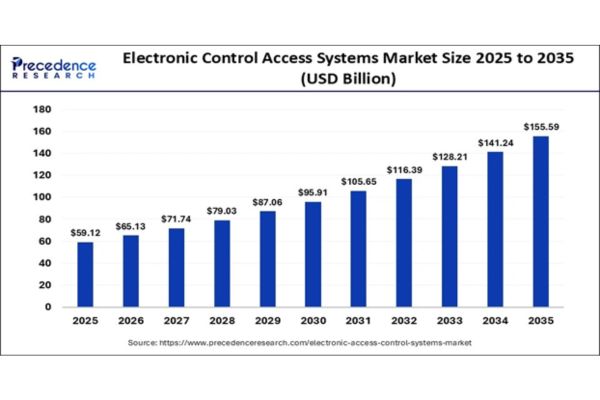
Key Takeaways
- North America led the market with the highest market share of 38% in 2025.
- The Asia Pacific is projected to grow at the fastest rate in the market during the forecast period.
- By type, the card-based access control segment held the largest market share of 48% in 2025.
- By type, the biometric access control segment is anticipated to expand at the fastest rate over the forecast period.
- By component, the hardware segment maintained a leading position in the market with a 55% share in 2025.
- By component, the software segment is expected to grow at the fastest rate during the forecast period.
- By end user, the commercial segment dominated the global market with a 42% share in 2025.
- By end user, the residential segment is projected to grow at the fastest rate in the coming years.
- By technology, the wired systems segment accounted for a major revenue share of 60% in 2025.
- By technology, the wireless systems segment is expected to grow at the fastest rate during the forecast period.
Electronic Control Access Systems Market Overview
The electronic control access systems market includes security solutions that manage and monitor access to both physical and digital assets in commercial, residential, and government sectors. These systems combine security technologies like biometrics, cloud computing , IoT, and AI to provide users with a safe and effective way to manage access. Modern security systems feature mobile access controls, multi-factor authentication, and cloud-based platforms that enable remote access, better monitoring, and greater system flexibility. The market is expanding rapidly as companies aim to create safe environments while improving operational efficiency and adopting digital technologies that ensure secure access systems.
How is AI Impacting the Electronic Control Access Systems Market?
Electronic access control systems are being revolutionized through the integration of AI and IoT technologies. AI-driven systems are changing the way security systems operate by enabling predictive security, facial recognition, and behavior analysis. By using these technologies, it is possible to respond quickly and accurately. The use of AI-driven analytics enables continuous monitoring of users and the rapid identification of suspicious behavior. Therefore, firms can amplify the defense against intrusion and human error and guarantee a greater safety level.
Regional Outlook of the Electronic Control Access Systems Market
Asia Pacific
Asia Pacific is expected to grow at the fastest rate in the market throughout the forecast period, driven by rapid urbanization, expansion of industrial facilities, and the development of smart buildings. With densely populated commercial, industrial, and critical areas facing increasing security threats, there is a growing demand for advanced access control solutions . By leveraging IoT networks, AI analytics, cloud platforms, and predictive security, organizations across the region can efficiently manage multiple access points while ensuring robust protection.
North America
North America led the global electronic control access systems market with a share of 38.0% in 2025 because the commercial, residential, and government sectors implemented advanced security technologies. The region is at the forefront of developing advanced access control systems. The region benefits from a high concentration of major market players and technology innovators. With the growing trend of smart buildings and high adoption of the Internet of Things, there is a rising demand for security solutions to protect valuable assets. Organizations across the region have been adopting advanced access control solutions because the government mandates compliance with workplace safety standards, cybersecurity laws, and public security protocols.
Electronic Control Access Systems Market Companies
Johnson Controls International plc
A major global player, Johnson Controls provides integrated electronic access control solutions under brands like Tyco, including biometric, card-based, and cloud-enabled systems. Its strength lies in combining access control with building automation, HVAC, and security platforms for enterprise-level deployments.
Honeywell International
Honeywell offers advanced access control platforms such as Pro-Watch and WIN-PAK, delivering scalable and integrated security solutions. The company focuses on unified systems that combine access control with fire safety, surveillance, and building management technologies.
ASSA ABLOY AB
ASSA ABLOY is a leading provider of physical and electronic access solutions, including smart locks, biometric systems, and identity technologies. Its extensive global portfolio and continuous acquisitions strengthen its position in digital and cloud-based access control systems.
Bosch Security Systems (Robert Bosch GmbH)
Bosch Security Systems delivers high-performance electronic access control solutions with strong emphasis on integration, data security, and analytics. Its offerings include access control software, biometric solutions, and IP-based security systems for commercial and industrial applications.
Siemens AG
Siemens AG provides advanced building security and access control solutions integrated with its smart infrastructure portfolio. The company focuses on digitalization, automation, and centralized security management for large-scale commercial and industrial facilities.
HID Global Corporation
HID Global is a key innovator in identity-based access control, offering smart cards, mobile credentials, and biometric authentication systems. Its open-platform architecture and scalable solutions make it a leader in modern, cloud-enabled access control ecosystems.
Segment Insights of the Electronic Control Access Systems Market
Type Insights
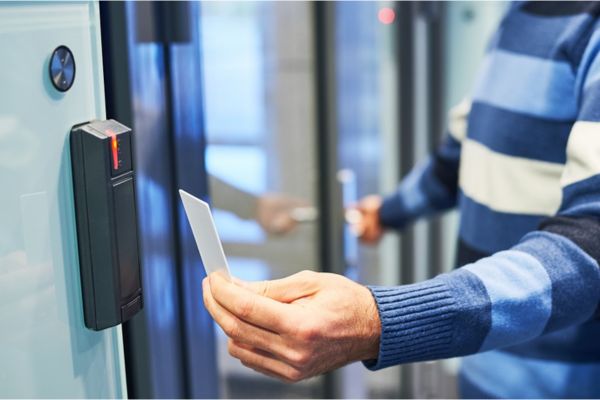
The card-based access control segment dominated the electronic control access systems market with the largest share of 48% in 2025. This is because organizations often prefer card-based access control systems for their affordability and easy installation. These systems find application in commercial environments, such as office spaces and retail centers, and government offices. These systems enable businesses to track and control access points, which results in better resource management at their facilities.
Component Insights
The hardware segment held a dominant position in the electronic control access systems market with a major share of 55% in 2025. This is because of the increased demand for physical security infrastructure. Hardware solutions such as readers, controllers, locking systems, and sensors are the backbone of access control systems. Organizations continue to invest heavily in these devices to establish secure and reliable infrastructure, as they form the foundation for implementing advanced security solutions.
End User Insights
The commercial segment held a dominant position in the market while holding a major share of 42% in 2025. This is mainly due to the widespread adoption of electronic access control systems in offices, retail stores, and hospitality businesses. These facilities use such systems to manage employee and visitor access across all entry points. The integration with existing infrastructure ensures seamless operation across multiple locations, driving adoption in the sector.
Technology Insights
The wired systems segment dominated the global market with a share of 60% in 2025 because of their reliable performance and high-security protection. Facilities such as government, defense, and large commercial complexes prefer wired solutions for their stable, low-latency connections and resistance to external interference. Additionally, the straightforward integration process allows organizations to connect existing security infrastructure with new technologies seamlessly.