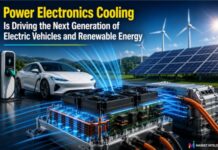


The Electric Vehicle (EV) Drive System Market is witnessing rapid growth as global automotive manufacturers pivot toward electrification and sustainable mobility. According to Introspective Market Research, the market is projected to expand from approximately USD 38 Billion in 2024 to over USD 65 Billion by 2032, at a CAGR of around 7.1% during the forecast period.
Key drivers include the increasing adoption of battery electric vehicles (BEVs), the integration of high-efficiency motors and inverters, supportive government policies, and the rise of lightweight, compact drive architectures designed to optimize vehicle range and performance.
Quick Insights: Electric Vehicle (EV) Drive System Market
- Market size (2024): USD 38 Billion
- Forecast value (2032): >USD 65 Billion
- CAGR (2024–2032): 7.1%
- Leading region: Asia-Pacific
- Fastest-growing region: Europe
- Dominant drive type: Permanent Magnet Synchronous Motor (PMSM)
- Key players: Bosch, Nidec, Siemens, BorgWarner, YASA Motors, Hyundai Mobis
Market Revenue & Segment Overview
| Segment | Market Position | Key Insight |
| By Drive Type | PMSM, Induction Motor, Switched Reluctance Motor | PMSM holds largest share due to high efficiency and torque density |
| By Vehicle Type | Passenger Cars, Commercial Vehicles, Two/Three Wheelers | Passenger cars lead adoption, commercial vehicles growing rapidly |
| By Component | Electric Motor, Inverter, Transmission | Inverters are gaining prominence with higher power density EVs |
| By Region | Asia-Pacific, Europe, North America, RoW | Asia-Pacific dominates production and consumption of EVs |
Are EV Drive Systems the Heart of the EV Revolution?
As EV adoption surges, drive systems are becoming central to vehicle efficiency and performance:
- Motor-Inverter Integration: Compact, high-efficiency designs improve vehicle range and reduce costs.
- Lightweight & Modular Architectures: Enable easy integration across vehicle platforms.
- High-Performance Applications: EV drive systems now cater to performance EVs and commercial fleets.
- Grid and Charging Synergy: Optimized for regenerative braking and advanced battery management.
Regional Market Outlook
- Asia-Pacific: Leads due to EV manufacturing hubs in China, Japan, and South Korea, and rapid adoption in mass-market EVs.
- Europe: Growing fast on the back of stringent CO₂ regulations, EV incentives, and a focus on premium and fleet EVs.
- North America: Steady growth driven by Tesla, Ford, GM, and emerging EV startups expanding drive system innovation.
Technology Advancements & Competitive Landscape
- Bosch is advancing compact PMSM solutions optimized for mid- to high-range EVs.
- Nidec introduced high-efficiency, low-noise drive systems for two-wheelers and light commercial EVs.
- Siemens focuses on scalable inverter solutions supporting high-voltage EV architectures.
- BorgWarner is enhancing drive system integration with thermal management and predictive analytics.
Market Challenges and Cost Pressures
Despite strong growth, the EV drive system market faces several hurdles:
- High Component Costs: Motors, inverters, and rare-earth materials impact overall vehicle pricing.
- Supply Chain Vulnerability: Dependence on rare-earth metals and semiconductor chips.
- Technical Complexity: Integration across EV platforms requires extensive R&D and validation.
- Competitive Pricing Pressure: EV OEMs demand cost-effective solutions without compromising performance.
Case Study: PMSM Implementation in Mid-Range EVs
A leading Asian EV manufacturer transitioned from induction motors to PMSMs for its mid-range passenger vehicles, resulting in:
Up to 10% improvement in energy efficiency
- Reduced motor weight by 12%
- Enhanced torque response and driving comfort
- Seamless integration with regenerative braking and onboard inverters
This highlights PMSM as the preferred choice for efficiency-focused EV platforms.