
Market Summary
According to latest research by Growth Market Reports, the global In-Memory AI Chip market size reached USD 3.05 billion in 2025, driven by rapid advancements in artificial intelligence and the growing demand for high-speed, low-latency data processing. The market is projected to expand at a robust CAGR of 28.5% from 2026 to 2034, reaching a forecasted market size of USD 28.7 billion by 2034. This significant growth is primarily fueled by the surge in AI-driven applications across diverse sectors, including edge computing, automotive, healthcare, and consumer electronics, as organizations seek to leverage real-time analytics and ultra-low-latency processing capabilities enabled by in-memory computing technologies.
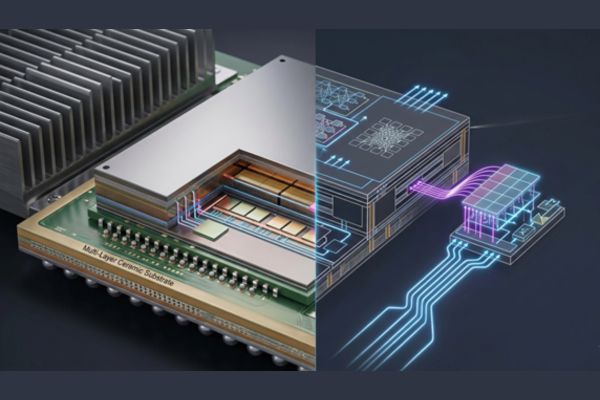
The In-Memory AI Chip Market is emerging as a transformative segment within the semiconductor industry, addressing one of the biggest challenges in conventional computing: the movement of data between processors and memory. In-memory computing places processing capabilities within or close to memory, helping reduce data-transfer requirements, latency, and energy consumption.
AI Workloads Accelerate Market Demand
Addressing the Memory Bottleneck
Artificial intelligence applications require enormous amounts of data to be accessed and processed rapidly. Traditional architectures can experience performance and efficiency limitations because data constantly moves between memory and processing units. In-memory AI chips aim to reduce this bottleneck by performing computations closer to where data is stored.
This approach is particularly relevant for workloads involving neural networks, matrix calculations, and other data-intensive operations. As AI models become larger and inference becomes more widespread, improving memory bandwidth and reducing unnecessary data movement are becoming increasingly important priorities for system designers.
Growing Importance of AI Inference
The transition from AI model training toward large-scale inference is creating new requirements for memory infrastructure. Agentic AI and increasingly complex AI applications can generate continuous processing demands, expanding the need for high-capacity and high-bandwidth memory systems.
In-memory AI chips can support this evolution by bringing computation closer to stored data. This architecture has the potential to improve responsiveness while helping organizations manage energy consumption in data centers, edge devices, and specialized AI systems.
Market Challenges
Despite strong growth potential, the In-Memory AI Chip Market faces several technological and commercial barriers. Designing memory and processing elements together can increase manufacturing complexity and require specialized architectures. Software compatibility is another challenge, as developers need appropriate tools and programming frameworks to fully utilize new hardware designs.
Manufacturing scalability, reliability, thermal management, and integration with existing AI ecosystems will also influence commercialization. Industry research indicates that fragmented software environments and qualification requirements remain important considerations for broader CIM and PIM deployment.
Future Opportunities
The development of HBM, SRAM, ReRAM, MRAM, and other advanced memory technologies is creating new opportunities for in-memory computing. Advanced packaging and tighter memory-logic integration could further improve bandwidth and computational efficiency.
Research into analog computing-in-memory is also expanding, particularly because it can provide highly energy-efficient processing for AI workloads. Emerging approaches involving 3D integration and improved readout architectures may further strengthen the technology’s commercial potential.
Competitive Landscape
Samsung Electronics
SK hynix
Micron Technology
Intel Corporation
NVIDIA Corporation
IBM Corporation
Qualcomm Incorporated
Broadcom Inc.
Renesas Electronics Corporation
Cerebras Systems
Future Outlook
The In-Memory AI Chip Market is positioned for substantial expansion as AI becomes increasingly data-intensive. The combination of rising inference workloads, energy-efficiency requirements, and growing memory demands is encouraging semiconductor developers to explore architectures that minimize data movement.
As hardware, memory technologies, advanced packaging, and software ecosystems mature, in-memory AI chips could become an increasingly important component of next-generation AI infrastructure. Their ability to combine computation and memory more efficiently makes them a promising technology for building faster, more responsive, and energy-conscious AI systems.
Source: https://growthmarketreports.com/report/in-memory-ai-chip-market