

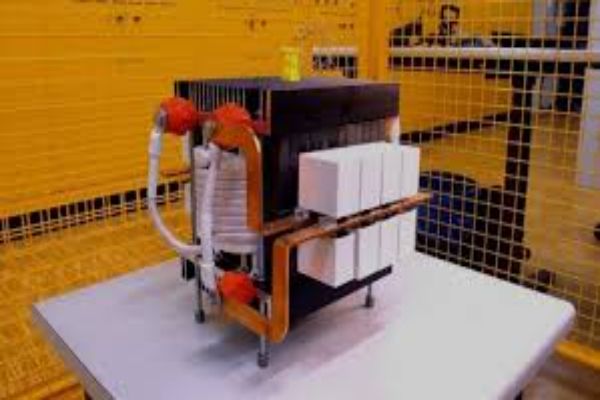
Electric power infrastructure is undergoing a massive transformation. As renewable energy sources, electric vehicles, and distributed energy systems become increasingly common, traditional power equipment is struggling to keep up with modern requirements. One such piece of infrastructure that has remained largely unchanged for over a century is the transformer.
Traditional transformers have served the grid reliably, but they are bulky, limited in functionality, and designed for one-directional power flow. In an era where power systems must be flexible, digital, and highly efficient, the emergence of Solid-State Transformers (SSTs) is gaining attention as a promising alternative.
Solid-state transformers combine power electronics, high-frequency transformers, and advanced control systems to create a new class of intelligent power conversion devices. Beyond simply stepping voltage up or down, SSTs enable higher efficiency, real-time control, renewable energy integration, and smart grid compatibility.
This article explores how solid-state transformers work, why they matter for energy efficiency, and how they could reshape future power systems.
Understanding Traditional Transformers
Conventional transformers rely on electromagnetic induction to transfer electrical energy between circuits. A transformer consists of primary and secondary windings wrapped around a magnetic core. When alternating current flows through the primary winding, it produces a magnetic field that induces voltage in the secondary winding.
Traditional transformers are widely used in:
- Power generation plants
- Electrical substations
- Industrial facilities
- Residential power distribution networks
Their main advantages include reliability, simplicity, and long operational lifespans. However, these systems come with several limitations:
- Large size and weight
- Limited control capabilities
- Low adaptability to variable power sources
- Inefficient integration with DC-based systems
As modern power networks evolve, these limitations are becoming increasingly evident.
What Are Solid-State Transformers?
A Solid-State Transformer (SST) replaces the traditional electromagnetic transformer with a power-electronics-based architecture that performs voltage conversion using semiconductor devices and high-frequency transformers.
Unlike conventional transformers that operate directly at line frequency (50–60 Hz), SSTs convert power through multiple stages:
- AC to DC Conversion
- DC to High-Frequency AC Conversion
- High-Frequency Isolation through a compact transformer
- AC/DC or DC/AC output conversion
This architecture allows SSTs to deliver features that conventional transformers cannot provide.
Key characteristics of SSTs include:
- Bidirectional power flow
- Voltage regulation and power quality control
- Reduced size due to high-frequency operation
- Integration with DC and renewable energy sources
- Digital monitoring and smart grid compatibility
Because of these features, SSTs are increasingly viewed as intelligent nodes within modern power grids.
Architecture of Solid-State Transformers
Solid-state transformers typically follow a three-stage architecture.
1. Rectification Stage
The first stage converts incoming AC power into DC using power electronic converters such as IGBTs or MOSFET-based rectifiers. This stage also enables power factor correction and grid stabilization.
2. High-Frequency Isolation Stage
The DC power is converted into high-frequency AC, which is then passed through a high-frequency transformer. Operating at higher frequencies significantly reduces transformer size and weight.
High-frequency transformers are much smaller because:
- Magnetic cores can be smaller
- Energy transfer per cycle increases
- Reduced copper and core losses
3. Output Conversion Stage
The final stage converts the isolated power back into AC or DC, depending on the application.
This stage allows SSTs to provide:
- Multiple voltage outputs
- DC distribution capability
- Integration with renewable energy systems
Why Energy Efficiency Matters
Energy efficiency has become a critical priority for power systems worldwide. According to energy studies, a significant portion of electricity losses occur during transmission and distribution.
Traditional transformers contribute to losses through:
- Core losses
- Copper losses
- Reactive power inefficiencies
Although these losses seem small individually, they accumulate across thousands of transformers in power networks.
Solid-state transformers help reduce these inefficiencies by offering:
- Advanced power conversion techniques
- Dynamic voltage regulation
- Reduced idle losses
- Improved power quality
These improvements can significantly reduce overall grid energy losses.
How SSTs Improve Energy Efficiency
1. High-Frequency Operation
Traditional transformers operate at low frequencies, requiring large cores and windings. SSTs operate at higher switching frequencies, which enables compact magnetic components and improved energy transfer.
High-frequency power conversion reduces:
- Core losses
- Magnetic material usage
- Overall system footprint
This results in higher power density and better efficiency.
2. Intelligent Power Flow Management
SSTs enable real-time power flow control, allowing utilities to dynamically regulate voltage levels and optimize energy distribution.
Smart power management helps:
- Reduce transmission losses
- Balance grid loads
- Improve voltage stability
This capability is particularly valuable in smart grid architectures.
3. Renewable Energy Integration
Renewable energy sources such as solar panels and wind turbines often generate variable and DC-based power.
Traditional transformers are not designed to directly handle such sources.
Solid-state transformers provide built-in converters that allow seamless integration with:
- Solar photovoltaic systems
- Wind turbines
- Energy storage systems
- Microgrids
By enabling efficient renewable integration, SSTs help reduce dependence on fossil fuel-based generation.
4. Bidirectional Power Flow
Modern power systems increasingly involve two-way power flow, especially with the rise of distributed energy resources.
For example:
- Homes with rooftop solar panels may feed electricity back into the grid.
- Electric vehicles may supply stored energy during peak demand.
Traditional transformers are designed for one-directional power flow. SSTs, however, naturally support bidirectional energy transfer, improving grid flexibility and efficiency.
5. Power Quality Improvement
Poor power quality leads to energy waste and equipment damage.
Solid-state transformers can actively regulate:
- Voltage fluctuations
- Harmonic distortion
- Reactive power
This leads to improved power quality and reduced system losses.
Key Applications of Solid-State Transformers
SSTs are gaining attention across several industries due to their efficiency and smart control capabilities.
Smart Grids
In smart grid systems, SSTs act as intelligent nodes capable of monitoring and controlling power flows.
They allow utilities to:
- Detect faults quickly
- Manage distributed generation
- Optimize energy distribution
Electric Vehicle Charging Infrastructure
Electric vehicle charging stations require efficient power conversion and high power density.
Solid-state transformers provide:
- Compact power electronics
- High-efficiency power conversion
- Fast charging support
As EV adoption grows, SSTs could play a key role in future charging networks.
Renewable Energy Systems
Renewable energy farms require efficient integration with the power grid.
SSTs enable:
- Direct DC connections
- Reduced conversion losses
- Flexible voltage management
These features make SSTs highly suitable for solar and wind power plants.
Railway Electrification
Railway systems often operate at different voltage levels and require efficient power conversion.
Solid-state transformers provide:
- Compact onboard power conversion
- Improved regenerative braking energy recovery
- Enhanced system efficiency
Data Centers
Modern data centers demand high efficiency and reliable power systems.
SSTs can improve:
- Power distribution efficiency
- Backup energy management
- Integration with renewable sources
Challenges in Solid-State Transformer Adoption
Despite their advantages, SSTs still face several challenges before widespread deployment.
High Cost
Power electronic components and advanced control systems increase the overall cost of SSTs compared to traditional transformers.
However, costs are expected to decrease as semiconductor technologies improve.
Thermal Management
Power electronic devices generate heat during operation.
Effective cooling systems are required to maintain reliability and efficiency.
Reliability Concerns
Traditional transformers can operate for 30–40 years with minimal maintenance.
SSTs contain many semiconductor devices, which may reduce lifespan if not properly designed.
Protection and Standardization
Power grids require strict protection systems.
Integrating SSTs into existing grid infrastructure requires new standards and protection mechanisms.
Advances Driving SST Development
Several technological trends are accelerating the development of solid-state transformers.
Wide Bandgap Semiconductors
Materials such as silicon carbide (SiC) and gallium nitride (GaN) enable higher switching frequencies and lower losses.
These devices allow SSTs to achieve:
- Higher efficiency
- Smaller form factors
- Improved thermal performance
Digital Control Systems
Advanced microcontrollers and digital signal processors allow precise control of power electronics.
This enables real-time monitoring, predictive maintenance, and automated grid management.
Modular Power Electronics
Modular SST architectures improve scalability and reliability.
Faulty modules can be replaced without shutting down the entire system.
The Future of Solid-State Transformers
Researchers and power companies are actively exploring SST deployment in next-generation power networks.
Several pilot projects are already demonstrating SSTs in:
- Smart grid substations
- Electric vehicle infrastructure
- Renewable energy farms
In the future, SSTs could become essential components of digital energy networks, enabling decentralized power systems that are flexible, efficient, and resilient.
As global energy demand rises and sustainability goals become more urgent, technologies that enhance power efficiency will play a crucial role in shaping the future of electricity.
Conclusion
Solid-state transformers represent a significant evolution in electrical power technology. By combining power electronics, high-frequency transformers, and intelligent control systems, SSTs offer capabilities far beyond traditional transformers.
Their ability to enable efficient energy conversion, renewable integration, bidirectional power flow, and smart grid compatibility makes them a powerful tool for modern energy systems.
While challenges such as cost, thermal management, and reliability remain, ongoing advancements in semiconductor devices and digital control technologies are steadily addressing these barriers.
As power grids transition toward more sustainable and decentralized models, solid-state transformers could become one of the key technologies driving the next generation of energy-efficient power infrastructure.










 is gaining)