
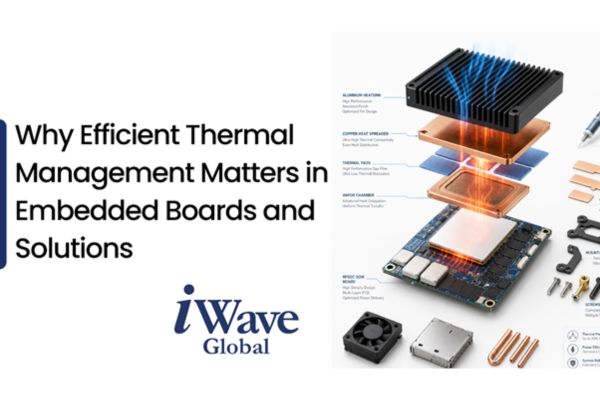
The growing demand for higher edge processing capabilities, enhanced performance, and miniaturization in embedded platforms has significantly increased power consumption and heat generation. These factors often result in the formation of thermal hotspots. Prolonged thermal stress can lead to performance degradation or, in severe cases, complete system failure. Moreover, sustained exposure to excessive heat shortens the lifespan of electronic components.
Effective thermal management is therefore essential to maintain devices in optimal operating conditions. As the electronics industry advances, innovative thermal management technologies have become critical to ensuring system reliability and performance. According to Market Research Future, the global thermal management market is projected to reach USD 20.3 billion by 2030, growing at a CAGR of 8% from 2022 to 2030.
Common Heat Dissipation Techniques in Embedded Systems
As embedded systems become more compact yet powerful, efficient heat dissipation is more crucial than ever. Designers employ various methods to transfer heat from components and PCBs, including:

Heat Sinks and Cooling Fans
A heat sink, made from thermally conductive metal, acts as a passive heat exchanger, dissipating heat through conduction to the surrounding air. The addition of cooling fans enhances airflow, accelerating heat removal for improved cooling efficiency.
Heat Pipe Integration
Heat pipes are widely used in high-temperature applications. They contain a working fluid that absorbs heat, vaporizes, and moves along the pipe to a condenser section, where it releases heat and reverts to liquid form & continuously cycling to maintain temperature balance.
Heat Spreaders
Heat spreaders facilitate heat transfer from smaller components to larger metallic surfaces. They are ideal for rugged devices exposed to shocks, vibrations, or sealed environments where airflow is limited.
Thermoelectric Coolers (TECs)
TECs are suitable for maintaining constant component temperatures in high-power systems. These coolers are often combined with air or liquid cooling methods to extend beyond the limits of traditional air cooling.
Thermal Vias
Thermal via arrays are placed near heat-generating components to conduct heat to copper planes and dissipate it through air. This method is especially effective in power management modules and components featuring thermal pads.
Liquid Cooling Systems
With liquids offering up to four times better heat transfer than air, liquid cooling provides superior thermal performance in compact designs. Such systems typically include a cold plate, pump, and heat exchanger to efficiently remove and dissipate heat from devices.
iWave’s Expertise in Thermal Solutions
iWave’s team of expert mechanical engineers designs custom heat sinks, fan sinks, and enclosures tailored to each product’s specific thermal requirements. Using advanced thermal simulation software, engineers evaluate heat flow and identify optimal cooling strategies to maximize product reliability.
Key analysis parameters include:
- Heat flow distribution
- Heat sink design optimization
- Active cooling strategy evaluation
iWave employs ANSYS Icepak for thermal simulation to pinpoint hotspots and determine the most effective cooling techniques. Theoretical heat dissipation values are calculated based on surface area, followed by simulations to assess system behaviour under different operating temperatures. This ensures the final thermal solution is both efficient and reliable.
Tailored Thermal Solutions Across Form Factors
iWave offers comprehensive thermal solutions for all form factors, including OSM, SMARC, Qseven, and SODIMM. These solutions leverage Aluminum Alloy AL6063, renowned for its excellent thermal conductivity, durability, recyclability, and non-toxic properties—making it ideal for transferring heat from components effectively.
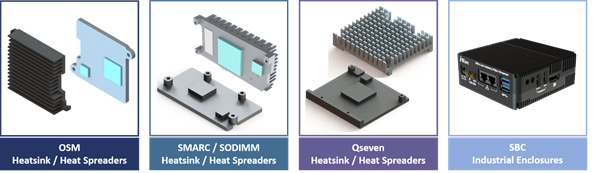
Through in-house thermal design capabilities, iWave enables customers to reduce engineering delays, field failures, and product iterations—optimizing both performance and cost.
Reducing device heat generation is the simplest way to enhance system efficiency. Nevertheless, implementing robust cooling mechanisms ensures sustained reliability and longer product life.
To learn more about iWave’s expertise in thermal management and solutions, reach out to our team at mktg@iwave-global.com