

The electronics manufacturing industry is evolving rapidly, driven by the need for precision, speed, and cost efficiency. As electronic devices become more compact and complex, traditional manual production methods are no longer sufficient to meet market demands. Process automation has emerged as a key enabler, revolutionizing how components are designed, assembled, and tested. From printed circuit board (PCB) fabrication to end-of-line quality control, automation ensures consistency, minimizes errors, and enhances productivity. This technological transformation is reshaping the entire electronics value chain, paving the way for smarter, more resilient manufacturing ecosystems.
Automation in PCB Design and Fabrication
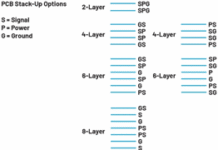
At the foundation of every electronic device lies the PCB, the structural and electrical backbone that connects all components. PCB design and manufacturing require high precision, as even the smallest error can lead to functional failures. Automation has streamlined this process significantly, enabling manufacturers to design, test, and produce boards with exceptional accuracy and speed.
In the design phase, computer-aided design (CAD) and computer-aided manufacturing (CAM) tools automate layout optimization, signal integrity analysis, and routing, ensuring efficient circuit paths and reduced interference. Once designs are finalized, automated PCB fabrication machines handle complex processes like etching, drilling, and layer alignment with micrometer precision.
Modern PCB assembly lines now rely heavily on surface-mount technology (SMT) automation, where high-speed robotic arms place tiny components onto boards at remarkable accuracy levels. Automated optical inspection (AOI) systems verify each placement in real time, drastically reducing the risk of defects. This high level of automation not only enhances quality but also shortens production cycles, helping manufacturers meet the growing global demand for consumer and industrial electronics.
Robotics and Precision in Component Assembly
Automation extends far beyond PCB fabrication, it defines the entire assembly process. Robotics has transformed how electronic components are integrated into devices, offering speed, reliability, and repeatability that manual labor simply cannot achieve.
In automated assembly lines, pick-and-place robots position resistors, capacitors, and microchips with sub-millimeter precision. These robots operate under sophisticated vision systems and feedback loops that allow real-time adjustments, ensuring every component is perfectly aligned and soldered. This level of precision is critical for modern electronics, especially in compact devices like smartphones, wearables, and automotive control units.
Additionally, automated soldering systems including reflow and wave soldering provide uniform heating and bonding across thousands of joints, eliminating inconsistencies common in manual processes. Robotics also enhances production scalability, allowing manufacturers to switch between product types with minimal downtime through programmable automation.
Smart Factories and the Role of IoT Integration
The rise of the Industrial Internet of Things (IIoT) has taken electronics manufacturing to new heights. Smart factories now rely on connected devices, sensors, and data-driven insights to monitor and optimize every stage of production.
IIoT-enabled machines collect real-time data on temperature, vibration, power usage, and process efficiency. This data is analyzed using artificial intelligence (AI) and machine learning algorithms to predict potential failures, optimize energy use, and improve equipment performance. For instance, if a machine in a PCB line shows signs of overheating, predictive systems can automatically adjust its load or schedule maintenance before downtime occurs.
Moreover, cloud-based manufacturing platforms enable seamless coordination between production facilities, suppliers, and logistics providers. This level of integration ensures transparency, traceability, and agility, which are the essential traits for electronics manufacturers navigating today’s fast-changing global supply chains.
Enhancing Quality Control Through Automation
Quality assurance is one of the most critical stages in electronics manufacturing, and automation has revolutionized how inspections and testing are conducted. Traditionally, manual inspection was time-consuming and prone to human error. Now, automated testing systems ensure every product meets performance and safety standards before reaching the market.
Advanced optical and X-ray inspection systems are capable of identifying defects such as soldering inconsistencies, misaligned components, or micro-cracks that are invisible to the human eye. These systems use machine vision and AI to analyze thousands of data points in seconds, allowing manufacturers to catch even the smallest deviations.
In functional testing, automated test equipment (ATE) checks the electrical performance of PCBs and assembled products. This process verifies parameters like voltage, current, and signal integrity under different conditions. Combined with automated feedback loops, these systems enable continuous quality improvement, ensuring products are reliable and compliant with international standards.
The Economic and Environmental Impact of Automation
Automation does more than enhance operational efficiency, it contributes significantly to cost savings and sustainability. By reducing manual errors and material waste, automated systems lower production costs and increase yield rates. Energy-efficient robotics and smart control systems also minimize power consumption, aligning with global sustainability goals.
Furthermore, automation enables manufacturers to onshore or nearshore production, reducing dependency on low-cost labor markets and improving supply chain resilience. In the long run, these efficiency gains translate into higher competitiveness, faster innovation cycles, and reduced environmental footprints.
Challenges and the Path Forward
Despite its advantages, the transition to automated manufacturing poses challenges. High initial investment costs, integration complexities, and the need for skilled operators can be barriers for smaller firms. Additionally, maintaining interoperability among different automation systems and ensuring cybersecurity in connected environments require ongoing attention.
However, with the growing adoption of collaborative robots (cobots) and low-cost automation solutions, even small and medium enterprises (SMEs) are now finding ways to leverage automation effectively. Governments and industry bodies are also supporting this shift through training programs and incentive schemes to develop a skilled workforce ready for digital manufacturing.
The Future of Electronics Manufacturing
From PCB design to final quality control, process automation has fundamentally reshaped the electronics manufacturing landscape. It has transformed production lines into intelligent ecosystems capable of delivering precision, consistency, and agility at scale.
As the industry continues to evolve, the integration of robotics, AI, and IoT will further enhance manufacturing intelligence, driving continuous innovation. The future of electronics production lies in fully connected, data-driven factories, where automation not only improves efficiency but also ensures sustainability and resilience.
In this new era, manufacturers who embrace process automation will lead the charge, delivering high-quality electronics faster, smarter, and more sustainably than ever before.